How AI becomes a QA’s best ally

Introductory remarks
Anything created by humans needs to be verified and validated to truly fulfill its purpose – and software is no exception. In a world where technology is evolving faster than ever, Quality Assurance (QA) isn’t just important; it’s indispensable. Yet, when cost-cutting begins, testing is often the first to be compromised on, seen as optional rather than essential.
What many organizations overlook is that even a minor issue slipping into production can lead to massive financial losses and irreversible reputational damage. At eggs unimedia, we understand that quality isn’t negotiable. That’s why we leave no stone unturned in empowering our QA teams with the latest tools, techniques, and technologies to deliver excellence.
Our commitment goes beyond traditional testing – we’re continuously exploring how Artificial Intelligence can become QA’s most powerful ally. By harnessing AI-driven insights and predictive analytics, we’re redefining what quality means in the digital era and helping our clients achieve faster releases, higher accuracy, and unmatched reliability.
Our QA teams – comprising test engineers, test analysts, and test managers – are actively leveraging /exploring the opportunities to leverage the latest advances in artificial intelligence across four key areas. By doing so, we’re not only accelerating and simplifying testing activities, but also driving up product quality while reducing overall cost and effort.
The rationale
Shift Left, Smarter – to test what matters
AI tools integrated into CI/CD pipelines can catch bugs during development – not after. This saves resources, money and time in post-release fixes. In addition, AI can prioritize test cases based on code changes and historical failure points. QA professionals now play a proactive role, setting up AI checks, guiding early-stage validation, and reducing technical debt from day one. Test teams spend time re-running everything and can focus on what's most likely to break – increasing test relevance and thus reducing cycle time.
Continuous quality, over continuous delivery
Machine learning models analyze patterns in code and behavior to forecast defects. Test experts can use these insights to plan smarter test strategies and address risk before it becomes reality. AI ensures round-the-clock automated tests – but it’s the test experts along with business drivers who interpret results, validate business flows, and ensure releases aren't just fast, but flawless in real-world use.
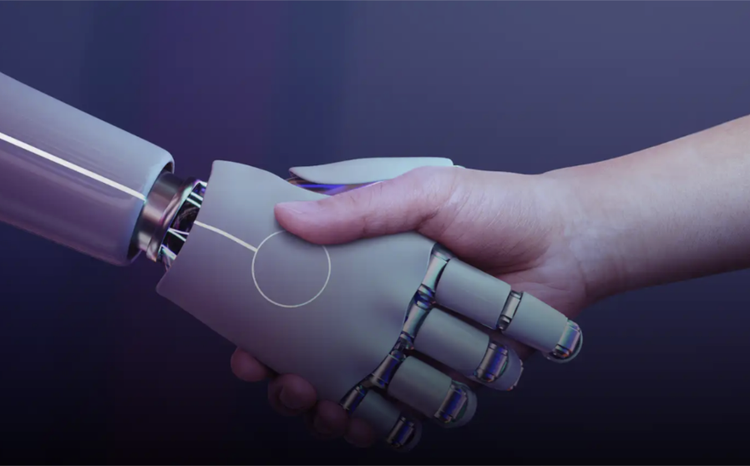


How to use AI to empower test teams comprising test engineers, test analysts and test managers – some insights
1. Use AI to Auto-Generate Regression Test Suites
What it means:
Regression testing ensures that new code changes don’t break existing functionality. Traditionally, building and maintaining regression test suites is time-consuming and prone to human error.
How AI can help you:
Modern AI tools (like Testim, Mabl, or Copilot for Testing) can analyze change logs, user flows, and historical test results to automatically generate or update regression test cases. The QA lead then only reviews and approves AI-suggested tests rather than writing them from scratch.
Impact:
Significant reduction in regression suite creation time, freeing test engineers to focus on exploratory testing or performance validation. For example, in a recent application module I tested, there were 30 possible user flows in a customer-facing application. Copilot automatically prioritized the 10 riskiest flows. Focusing our testing on this AI-generated priority list led to a 15% increase in discovered bugs within just 2-3 days of the test cycle. Without this AI assistance, reaching the same bug count would likely have required a significantly longer test cycle.
2. Add ML-Based Bug Prediction Tools to Sprint Planning
What it means:
Machine learning models can predict which parts of the code are most likely to contain defects, based on historical data.
How AI can help you:
Bug prediction systems use data like
- Code churn (how often files change)
- Developer
- History
- Commit complexity
- Past defect density
Before sprint planning, the test team runs a model trained in the past 12 months of development history. As an example, the model flags a specific module as high risk because it’s frequently modified and had 4 bugs in the last 2 releases. The QA team then uses this insight to allocate extra testing effort there or to write additional automated tests.
Impact:
ML-driven prediction improves test coverage on high-risk areas and reduces post-release defects by up to 30%.
3. Let AI flag flaky tests before they waste cycles
What it means:
Flaky tests are those that fail inconsistently – wasting CI/CD cycles and in turn trust with the developing team
How AI can help you:
AI models can analyze test execution history and detect statistical anomalies (tests that fail inconsistently due to reasons such as environmental changes).
Impact:
QA teams spend less time debugging false alarms, improving CI pipeline efficiency and confidence in test results.
As quoted by ChatGPT, companies like Google and Netflix already use this technique – Netflix’s “TestFlake” ML model cut flakiness debugging time by 50%+.
4. Use NLP bots to convert acceptance criteria into test cases
What it means:
Natural Language Processing (NLP) can interpret written user stories and acceptance criteria to suggest structured test cases automatically.
How AI can help you:
By parsing plain English requirements (“Given the user is logged in, when they add a product to cart, then the cart total updates”), AI can:
- Generate corresponding test case steps
- Even map them to existing automation frameworks.
Impact:
Effective use of LLM models like Chat GPT, Gemini, Perplexity and Claude in our eggs unimedia QA team.
Summary: The Future will be "AI with QA" not "AI instead of QA"
QA engineers are irreplaceable because they ensure software aligns with real user intent and business rules, think creatively to uncover issues that are not in the scripts, and uphold ethics by identifying biases and privacy risks that AI can’t detect.
Quality isn’t just about catching bugs. It’s about safeguarding user experience, guiding business workflows, and ensuring that AI-powered systems behave as intended.
In a world moving fast with AI, QA is the steady hand ensuring we move in the right direction.
When AI is the engine, QA is the compass and at eggs unimedia we embrace this idea.
Author: Kalai Murugesan, eggs unimedia
References:
- AI-driven tolls in modern software quality assurance: An assessment of benefits, challenges, and Future Directions
- Al in Software Testing: 15 Trends to Watch in 2025
- ChatGPT
Pic with hands: https://iemlabs.com/blogs/harnessing-ai-for-strategic-advantage/